Key Takeaways
- HIDS provides deep visibility into individual hosts by monitoring system activity, logs, files, processes, and configurations for suspicious behavior.
- Signature-based and anomaly-based detection help HIDS identify both known threats and unusual activities that may indicate emerging attacks.
- Host-level monitoring can detect threats that bypass perimeter defenses or originate from within the environment.
- HIDS and NIDS provide complementary security visibility, covering host-level activity and network-wide traffic respectively.
- Integrating HIDS with SIEM and other security tools improves threat correlation, investigation, incident response, and overall security visibility.
Looking to protect individual systems in your network from hidden threats?
A host-based intrusion detection system (HIDS) can help. HIDS monitors the behavior of devices to catch anomalies, providing a critical layer of security. In this article, we will cover how HIDS works, its benefits, challenges, and best practices for implementation.
Understanding Host Based Intrusion Detection Systems
A host based intrusion detection system (HIDS) is a security solution designed to monitor individual servers, endpoints, PCs, and other hosts for suspicious activity. By analyzing events occurring directly on a device, a host based intrusion detection system HIDS can identify unauthorized changes, malicious behavior, and other indicators of compromise that may not be visible through network-level monitoring alone.
Unlike network intrusion detection systems that focus on monitoring traffic across an entire network, HIDS zeroes in on specific hosts to catch threats that slip past the network perimeter. This concentrated approach allows for detailed monitoring of internal systems, such as files and data, ensuring that any evidence of suspicious activity is promptly detected. Additionally, host-based ids play a crucial role in enhancing security measures.
- Maturing Advanced Threat Defense
- 4 Must-Do's for Advanced Threat Defense
- Automating Detection and Response

How HIDS Works
At its core, a host intrusion detection system (HIDS) functions by continuously monitoring individual host systems for unusual activities that could indicate security breaches or attacks. This monitoring extends to various data sources, including application and operating system logs, as well as security-specific logs. Incorporating network traffic data enables HIDS to identify threats like brute-force login attempts from unfamiliar external IP addresses.
The power of HIDS lies in its ability to correlate different data sources to paint a comprehensive picture of potential security incidents. Through the collection and analysis of data from servers, computers, and other host systems, HIDS identifies anomalies by comparing snapshots of the file system over time.
When anomalies are detected, HIDS can automatically generate alerts to notify security teams, helping prioritize responses based on the severity of the detected threats.
Types of HIDS
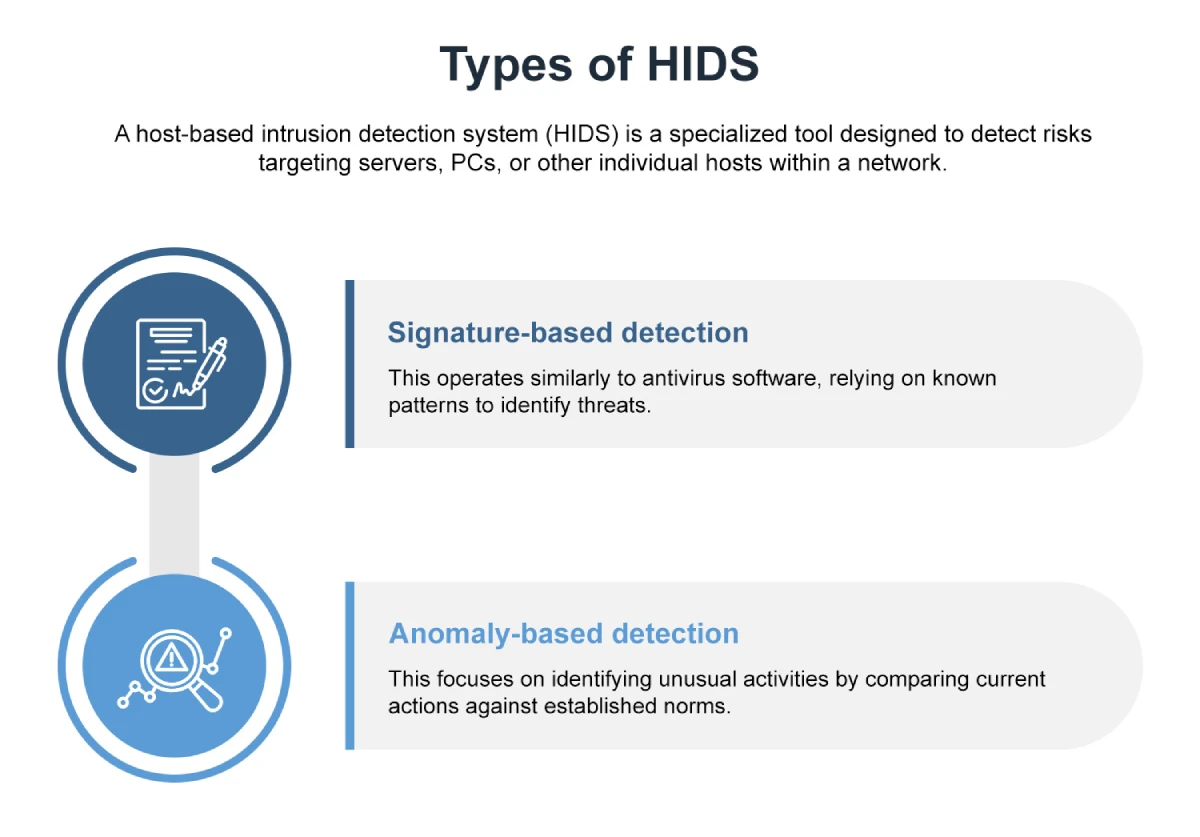
Host-Based Intrusion Detection Systems (HIDS) can be categorized into two primary types:
- Signature-based Detection
- Anomaly-based Detection
Signature-based detection operates similarly to antivirus software, relying on known patterns to identify threats. While effective against known threats, this method may struggle to catch new or unknown threats due to its reliance on pre-defined patterns.
On the other hand, anomaly-based detection focuses on identifying unusual activities by comparing current actions against established norms. This approach can detect novel threats that do not match existing signatures, making it a powerful tool against emerging security risks. However, it can also generate false positives by mistaking legitimate changes for suspicious behavior.
Many HIDS solutions combine both signature-based and anomaly-based methods to enhance detection capabilities and minimize blind spots. Additionally, HIDS systems can be classified based on their deployment methods into agent-based and agentless systems, each offering unique benefits and challenges depending on the security needs of the organization.
Key Components of HIDS Solutions
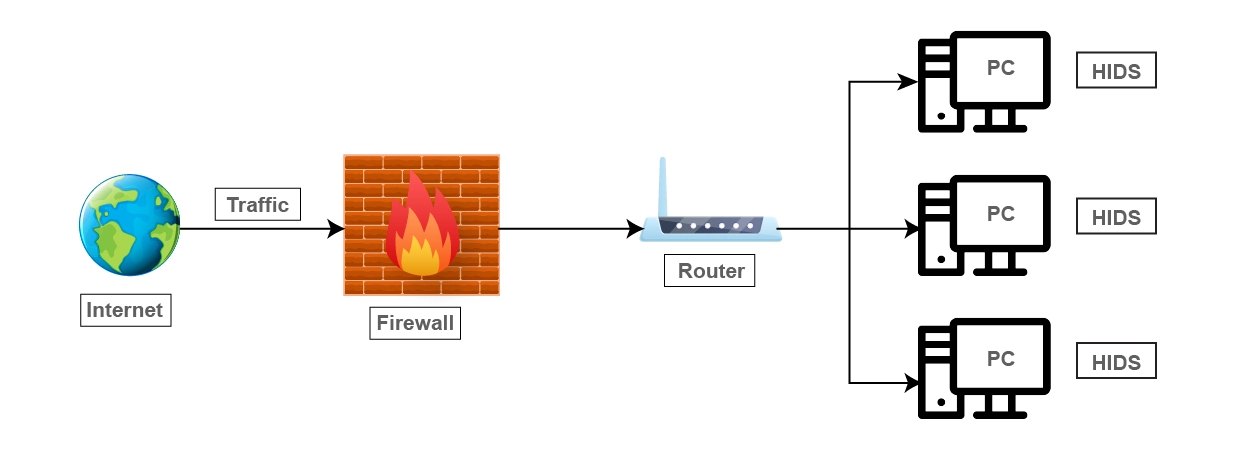
A comprehensive HIDS solution comprises several key components, including agents, sensors, and analysis engines. Agents, which may be installed on hosts, or sensor-based systems that gather information without the need for installation, play a crucial role in data collection. These data collectors feed information into the analytics engine, which evaluates the data to identify patterns or anomalies indicative of security threats.
Centralized data collection is a hallmark of effective HIDS solutions, allowing for easier analysis and long-term data retention. The system’s capabilities often include efficient log file searches, with filtering options based on various criteria to streamline the investigation process. This setup ensures that security teams can quickly access and analyze relevant data, enhancing the overall security posture of the organization.
Benefits of Deploying HIDS
Deploying a HIDS offers numerous benefits that significantly enhance an organization’s security.
- Quick threat detection – Monitors systems and services in real time for rapid threat identification.
- Granular visibility – Provides deep insights into critical components to detect risks early.
- Automated response – Triggers firewall rules instantly upon detecting threats, improving reaction time.
- Application behavior alerts – Notifies developers of unexpected changes, enabling early threat mitigation.
- Efficient log analysis – Filters logs by data, application, or criteria for faster investigations.
- Compliance support – Helps meet security compliance requirements by tracking and reporting system changes.
- Low network impact – Since it operates on individual hosts, it minimizes network bandwidth usage.
Common Use Cases for HIDS
The application of HIDS is extensive, with several common use cases that highlight its versatility. In data centers, HIDS is instrumental in safeguarding critical infrastructure and ensuring server security. On individual endpoints, HIDS protects devices from malware and insider threats, enhancing overall endpoint security.
In cloud environments, HIDS provides deeper insights into virtual instances, bolstering security and ensuring compliance with regulatory standards. HIDS is also essential in scenarios such as compliance monitoring, critical system protection, and incident response, providing a robust defense against a variety of security threats.
Comparing HIDS and Network Based IDS
HIDS and NIDS provide complementary forms of visibility rather than one being a more advanced version of the other. A host based intrusion detection system provides detailed visibility into activity occurring on individual endpoints and servers, while NIDS analyzes network traffic for suspicious behavior across the environment. Using both can help organizations detect threats across host and network layers.
When comparing Host Based Intrusion Detection Systems (HIDS) with Network Based Intrusion Detection Systems (NIDS), several key differences emerge:
| Parameter | HIDS (Host-based Intrusion Detection System) | NIDS (Network-based Intrusion Detection System) |
|---|---|---|
| Focus Area | Monitors individual hosts for internal threats | Monitors network traffic to detect external threats |
| Detection Method | Primarily signature-based detection | Uses both signature-based and anomaly detection |
| Resource Usage | Can be resource-intensive on the host device | Centralized monitoring reduces host resource load |
| Visibility Scope | Provides deep insights into host behavior | Offers a broad view of network-wide security |
| Deployment | Installed on individual endpoints/servers | Deployed at network perimeters or traffic chokepoints |
Essentially it can be said that Network-Based Intrusion Detection Systems are more evolved versions of HIDS which help centralize the operations.
Challenges and Limitations of HIDS
Despite its benefits, HIDS faces several challenges and limitations that can impact its effectiveness. One major challenge is its resource-intensive nature, which can lead to performance degradation on the host system. Managing numerous HIDS across diverse hosts can also be complex, especially if each host requires unique configurations.
Additionally, misconfiguration or outdated signatures can result in an increased rate of false positives or negatives, overwhelming security teams with alerts. Attackers may employ evasion tactics to bypass HIDS, compromising its effectiveness and potentially malicious behavior.
Furthermore, HIDS’s limited visibility on network-wide threats can hinder an organization’s overall security, necessitating the correlation of HIDS log data with other security data for a comprehensive view.
This is where a good Network Detection and Response solution can help enterprises solve their problems pertaining to network visibility.
Best Practices for Implementing HIDS
Following best practices is crucial for maximizing the effectiveness of a HIDS deployment. Clear objectives for HIDS should focus on specific threats like malware or unauthorized access. Configuring HIDS according to best practices, including regular updates to signatures and customized rules, enhances its threat detection and response capabilities.
Placing sensors strategically at key computer networks points improves detection capabilities for both internal and external threats. Regular user training to boost security awareness, along with continuous monitoring and log analysis, are vital components. Integrating HIDS with incident response strategies and maintaining compliance through ongoing logs of host activities further fortifies security.
Enhancing HIDS with Additional Security Tools
Enhancing HIDS with additional security tools can create a more cohesive and robust defense against emerging threats. Integrating HIDS with other security solutions, such as Security Information and Event Management (SIEM) systems, can improve the overall security posture. These integrations enable better data correlation and more comprehensive threat analysis.
For instance, the USM platform’s powerful SIEM capabilities and centralized logging complement HIDS by offering a broader view of security events and simplifying compliance with regulatory standards. Leveraging such tools ensures that HIDS is part of a multi-layered security strategy, addressing various aspects of cybersecurity.
Incident Response and HIDS
Host-based intrusion detection systems play a critical role in incident response by notifying teams of suspicious activities that could indicate an attack and help detect attacks. A comprehensive incident response plan outlining steps to take upon HIDS threat detection is crucial for effective threat management.
HIDS provides crucial insights into irregular activities within a host, enabling thorough incident analysis. Automated responses to certain security threats, such as adjusting firewall rules, and continuous monitoring for unauthorized changes to files help identify malware and unwanted alterations.
- Block attacks before damage occurs
- Prevent lateral movement inside your network
- Reduce false positives & alert fatigue

The Future of Host Based Intrusion Detection Systems
The future of Host Based Intrusion Detection Systems (HIDS) is bright, with emerging trends focusing on leveraging innovative technologies such as artificial intelligence (AI) and machine learning. These advancements enable HIDS to adapt and respond more effectively to evolving security threats, improving the detection of advanced threats like Advanced Persistent Threats (APTs) and Zero-day attacks.
The integration of machine learning within HIDS signals a promising future, enhancing their capability and effectiveness in protecting systems. As these technologies continue to develop, HIDS will become even more adept at identifying and mitigating potential threats, ensuring robust security for organizations.
Conclusion
Host Based Intrusion Detection Systems (HIDS) offer a powerful means of securing individual hosts within a network by monitoring for suspicious activities and providing detailed insights into endpoint behavior. They operate by analyzing various data sources, such as application and operating system logs, to detect anomalies and potential threats. The combination of signature-based and anomaly-based detection methods enhances their effectiveness, while the integration of additional security tools, such as SIEM systems, further strengthens the security posture.
Despite challenges such as resource intensity, false positives, and limited network-wide visibility, adhering to best practices in HIDS deployment can mitigate these issues. The future of HIDS looks promising with the integration of AI and machine learning, which will improve their ability to detect and respond to advanced threats. By understanding and implementing HIDS effectively, organizations can significantly enhance their security defenses against an ever-evolving landscape of cyber threats.
Frequently Asked Questions
What is a Host Based Intrusion Detection System (HIDS)?
A Host-Based Intrusion Detection System (HIDS) is a security tool that monitors individual hosts to identify suspicious activities and potential threats, offering detailed insights into endpoint behavior.
How does a host-based intrusion detection system (HIDS) work in cybersecurity?
In cybersecurity, a host based intrusion detection system works by establishing visibility into activity occurring directly on the protected host. It monitors operating system and application logs, file integrity, user activity, system configurations, running processes, and other host-level events. The HIDS then compares this activity against known attack signatures or established behavioral baselines. If it detects suspicious changes, unauthorized access, abnormal processes, or other indicators of compromise, it generates an alert so security teams can investigate and respond.
What are the advantages of using host-based intrusion prevention over other security measures?
One of the main advantages of host-based intrusion detection and prevention is its visibility into activity occurring directly on individual systems. Network-level security measures can identify suspicious traffic, but they may not provide the same insight into file modifications, processes, application activity, user behavior, or configuration changes occurring on a host.
This host-level visibility can help security teams identify threats that bypass perimeter defenses or originate from inside the environment. Host-based intrusion prevention capabilities can go a step further by taking predefined actions against detected threats, depending on the solution. However, HIDS should complement rather than replace network monitoring, endpoint security, SIEM, and other security controls because its visibility is primarily limited to the hosts it monitors.
What are the main types of HIDS?
The main types of Host Intrusion Detection Systems (HIDS) are signature-based detection, which identifies threats through known patterns, and anomaly-based detection, which flags unusual activities by comparing them to established norms. Each type serves a distinct purpose in enhancing security.
What are the challenges of using HIDS?
Using Host Intrusion Detection Systems (HIDS) presents challenges such as high resource intensity, a tendency to generate false positives, limited visibility across the network, and the complexity involved in managing multiple systems on diverse hosts. These factors can complicate effective security monitoring and response.
How can HIDS be enhanced with additional security tools?
Enhancing HIDS by integrating it with SIEM systems can significantly improve data correlation and threat analysis, resulting in a more robust defense against evolving threats. This interconnected approach facilitates better threat detection and response capabilities.